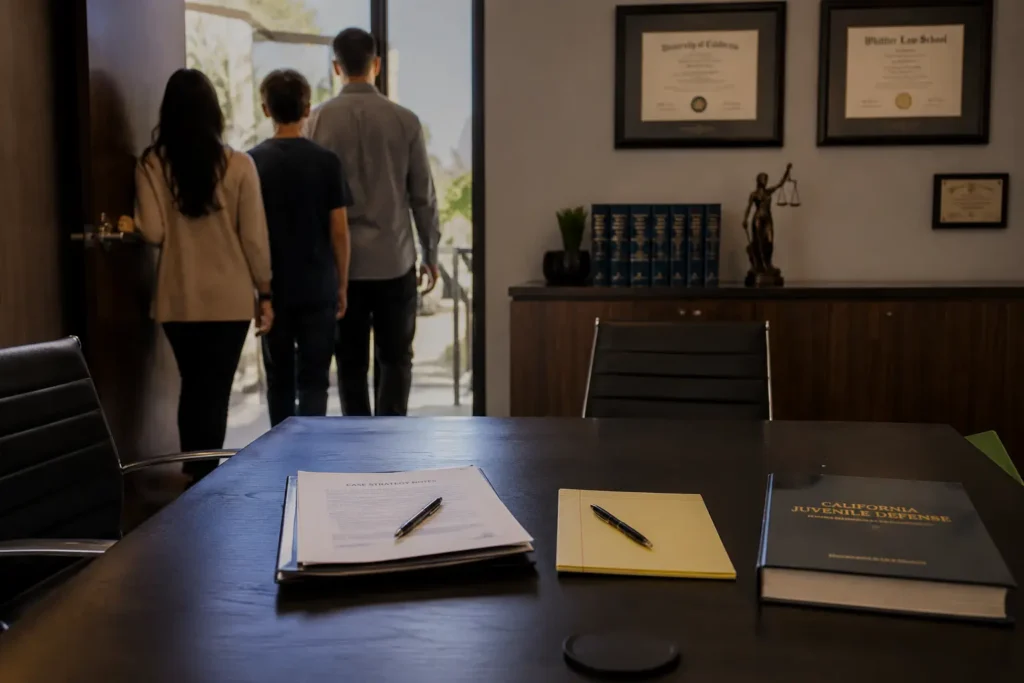
Getting a call that your child has been arrested is one of the most frightening experiences a parent can go through. The juvenile justice system in California is different from the adult criminal system, but that does not mean the stakes are low. A juvenile record can affect your child’s education, career, and future in ways that last well beyond their teenage years. If you are looking for criminal defense attorneys near you who understand how the juvenile system actually works in California, the Law Office of Jimmy Cha is ready to help.
We work with families throughout CA County—parents who are scared, confused, and want to protect their child. That is exactly who we are here for.
» Speak with a juvenile defense attorney in California today
» See how we have helped families – Testimonials
» Learn about our legal team – About Our Lawyers
The Juvenile System Is Separate From Adult Court—But It Is Still a Legal Process
California has a dedicated juvenile justice system that handles cases involving minors under the age of 18. The language is different—cases are called petitions rather than charges, and hearings replace trials—but make no mistake: the consequences are real, and your child needs proper legal representation.
Most juvenile cases in CA are heard at the California Juvenile Court or one of its regional branches. Proceedings are generally closed to the public, but that privacy does not reduce the importance of having an experienced criminal attorney in California who handles juvenile cases regularly.
The juvenile court has a range of dispositions available, from informal probation and community service on the lighter end to commitment to the Division of Juvenile Justice (formerly the California Youth Authority) on the serious end. Where a case lands depends heavily on the charge, your child’s prior record, and the quality of the defense presented.
Common Juvenile Charges We Handle in California
Juvenile arrests in LA cover a wide range of situations. Some of the most common charges we see include:
- Assault and battery arising from school fights or confrontations in public
- Shoplifting and theft offenses, including organized retail crime charges involving minors
- Drug possession on or near school grounds
- Vandalism and graffiti-related offenses
- Robbery and carjacking, which are the charges most likely to result in transfer to adult court
- Weapons possession, including knives on school property and illegal firearms
- Joyriding and vehicle-related offenses
- Cyber crimes and social media-related threats
Each of these categories has its own set of legal issues and potential consequences. Criminal defense attorneys in California who work the juvenile docket know that the approach for a first-time shoplifting case is completely different from what is needed when a minor is facing a serious felony.
The Single Most Dangerous Outcome: Transfer to Adult Court
For parents, the scariest words in juvenile law are “fitness hearing.” This is the proceeding where a judge decides whether your child should be tried as an adult. If the transfer happens, your minor child faces adult charges, adult sentencing, and potentially adult prison.
Transfer to adult court is most likely when:
- The offense is a serious or violent felony—murder, rape, robbery, carjacking
- The minor was 16 or older at the time of the alleged offense
- There is a prior record of sustained petitions
- The court finds the minor is not amenable to rehabilitation through the juvenile system
Fitness hearings require aggressive, prepared representation. As criminal defense attorneys near you who know how LA juvenile courts operate, we know what judges look for in these hearings and how to present your child’s case in the most favorable light—including evidence of school performance, family support, community ties, and any steps toward rehabilitation already underway.
» Contact a criminal defense attorney near you in California for a juvenile case consultation
What Parents Can Do Right Now to Help Their Child’s Case
After an arrest, how the family responds matters. Here is practical guidance for parents navigating this process:
Do not push your child to explain everything to you in detail right away. Anything your child tells you could potentially become relevant if the case escalates. Let the attorney hear the full story first in a protected setting.
Do not let your child speak to police or probation officers without an attorney present. Minors have the same Miranda rights as adults, and waiving those rights can cause serious damage to the case.
Start gathering documentation that shows your child’s positive character. School records, attendance history, grades, extracurricular involvement, and letters from teachers or coaches can all play a meaningful role at disposition hearings.
Stay engaged with the process. Courts respond positively when they see families taking the situation seriously and participating actively in finding solutions. Showing up, asking questions, and following through on any recommendations reflects well on your child.
Sealing a Juvenile Record in California—What Is Actually Possible
One of the most important things a criminal attorney in California can do for a young client is lay the groundwork for sealing the juvenile record down the line. California law allows most juvenile records to be sealed once the minor reaches age 18 (or five years after the jurisdiction of the juvenile court ends), provided certain conditions are met.
A sealed record means:
- The arrest and adjudication are no longer accessible in routine background checks
- Your child can truthfully state they were not arrested or convicted for most purposes
- Educational and employment opportunities that would otherwise be closed can open up again
There are exceptions—certain serious felony offenses are not eligible for sealing, and the record may remain accessible to certain government agencies. But for the vast majority of first-time juvenile offenders, sealing is a realistic and achievable goal. Choosing criminal defense attorneys in California who understand both the immediate case and this longer-term strategy gives your child the best possible footing going forward.
Answers to the Questions Parents Ask Us Most
Will my child have a permanent criminal record after a juvenile arrest?
Not automatically. The juvenile record is separate from the adult criminal system and is generally sealed when the minor turns 18 or meets other eligibility conditions. However, certain serious offenses can result in records that are harder to seal, which is why how the case is handled from the start matters so much.
Can my child be tried as an adult in California?
Yes, in serious cases. Prosecutors can ask the court to transfer a juvenile to adult court through a fitness hearing. A criminal defense attorney near you who handles juvenile cases regularly knows how to fight that transfer and present the evidence that keeps your child in the juvenile system.
What is the difference between informal probation and formal probation for juveniles?
Informal probation (Welfare and Institutions Code 654) is a voluntary agreement—no petition is filed, and if the minor completes the program successfully, there is no adjudication. Formal probation involves a sustained petition (the juvenile equivalent of a conviction) and court supervision. Informal resolution is almost always the better outcome.
Does my child need their own attorney, or can one lawyer represent both of us?
Your child needs their own attorney. The attorney’s job is to represent your child’s best interests, which are not always perfectly aligned with what parents want. Having independent legal representation ensures your child gets advice tailored specifically to their situation.
What happens at a juvenile court hearing in California?
Juvenile hearings are held before a judge, not a jury. The judge reviews evidence, hears from the minor, parents, probation officer, and attorneys, and decides whether to sustain the petition and what disposition is appropriate. Having a well-prepared defense attorney who knows the specific judges in the LA juvenile courts makes a real difference in these proceedings.
Protecting Your Child’s Future Starts With the Right Attorney
The juvenile justice system is designed to rehabilitate, not just punish—but that does not mean it operates automatically in your child’s favor. The quality of the legal representation in the room shapes every outcome from the initial detention decision to the final disposition.
We have helped families across California navigate these cases with clarity, compassion, and real results. We treat every juvenile client as a person with a future worth fighting for, not just a case file.
Find out more about our experience on the About Our Lawyers page, read testimonials from families we have helped, or browse our legal blog for more information about California criminal defense.
» Call now for a confidential juvenile defense consultation in California